MoU for Thalassemia Awareness Campaign
Total Views |


MKSSS and Jankalyan Blood Centre Sign MoU for Thalassemia Awareness Campaign
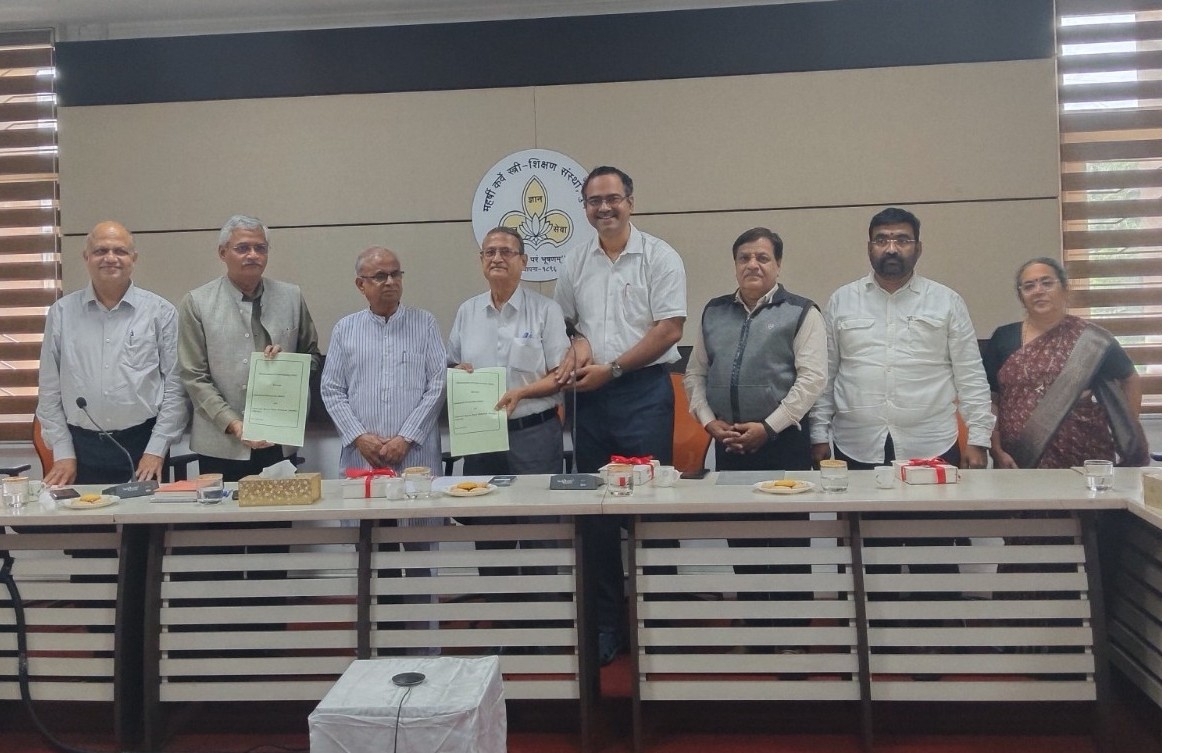
Pune, August 29, 2026: Maharshi Karve Stree Shikshan Samstha (MKSSS) and Jankalyan Raktapedhi Pune (JKRP), today signed a Memorandum of Understanding (MoU) to undertake activities related to the Thalassemia Awareness Campaign. A formal programme for the signing of the agreement was organised at MKSSS.
Pune, August 29, 2026: Maharshi Karve Stree Shikshan Samstha (MKSSS) and Jankalyan Raktapedhi Pune (JKRP), today signed a Memorandum of Understanding (MoU) to undertake activities related to the Thalassemia Awareness Campaign. A formal programme for the signing of the agreement was organised at MKSSS.
Thalassemia is an inherited blood disorder that can affect any individual and, unfortunately, may result in affected children requiring regular blood transfusions throughout their lives. With the objective of ensuring that no child is born with Thalassemia, a comprehensive awareness campaign is being undertaken across Maharashtra through the RSS Jankalyan Samiti.
MKSSS is actively participating in this campaign. As part of the collaboration, JKRP will conduct Thalassemia awareness and screening programmes for students of the institution. The MoU formally establishes and strengthens this collaboration.
Shri Suhasrao Hiremath, Member of the Akhil Bharatiya Karyakari Mandal of the Rashtriya Swayamsevak Sangh, was the Chief Guest at the programme. Shri Mukul Patgaonkar, Prant Sahakaryavah of Jankalyan Samiti; Dr. Ashutosh Kale, State Coordinator of the Thalassemia Awareness Campaign; Dr. Avinash Wachhasundar, Managing Trustee of JKRP; Dr. Atul Kulkarni, Director Incharge of JKRP, Smt. Shraddha Chavan, Principal of D. E. S. Nursing College; Dr. Anand Lele, Vice-Chairman of MKSSS; Shri Dhananjay Wadekar, Smt. Uma Joshi and Smt. Rekha Sonune, members of the management committee; Dr. P. V. S. Shastry, Secretary of MKSSS; Smt. Kanchan Satpute, Deputy Secretary; along with principals of the MKSSS's colleges in Pune and heads of its skill development divisions, were also present.
The programme began with a tribute to Ms. Hiral Shah, a young activist associated with the Thalassemia Awareness Campaign and herself a Thalassemia warrior, who passed away recently.
In his introductory remarks on behalf of JKRP Dr. Atul Kulkarni said that MKSSS has always been a source of support and encouragement for Jankalyan in undertaking meaningful new initiatives in the social sector. He expressed confidence that the MoU would help shape an important initiative in a systematic and effective manner.
Dr. P. V. S. Shastry spoke about the longstanding association between the MKSSS and JKRP. He said that regular blood donation camps are organised at the institution with the support of the blood centre, with the objective not only of collecting blood but also of creating wider awareness about blood donation and related issues. He further stated that, since women’s empowerment is one of the institution’s core objectives, creating awareness among all its students about inherited blood disorders such as Thalassemia is also an important priority. It was with this perspective that the institution decided to participate in the campaign.
Representing Jankalyan Samiti, Dr. Ashutosh Kale explained the rationale behind the campaign. Jankalyan Samiti currently has associated 14 blood centres at different locations across the state. A significant number of Thalassemia patients regularly receive transfusion support through these centres. Over the past five years, approximately 95,000 blood bags have been provided free of cost to Thalassemia patients, with a value exceeding ₹14 crore. Dr. Kale said that while providing ongoing transfusion support remains essential, it is equally important to address the root of the problem. Therefore, the Thalassemia Awareness Campaign has been conceived with the larger objective of ensuring that no child is born with Thalassemia through widespread awareness and preventive efforts. Following this, representatives of both institutions formally signed the Memorandum of Understanding.
Addressing the gathering, Chief Guest Shri Suhasrao Hiremath said that the ultimate goal should be empowerment of the nation through women’s empowerment and, through national empowerment, the achievement of world peace. Explaining the concept of an empowered society, he said that just as a human body cannot be considered fully healthy if even one of its organs is weak or impaired, a society cannot be considered truly empowered if even a single section of it remains vulnerable.
He emphasised the need to approach the Thalassemia Awareness Campaign with empathy and a strong sense of social responsibility, and congratulated both institutions for taking the initiative. He appealed to them to undertake every possible effort to ensure that this awareness and social awakening reaches a large number of people and develops into a sustained, long-term movement.
He also pointed out that blood donation among women is generally lower and said that efforts to increase voluntary blood donation among women could also contribute to addressing misconceptions and concerns related to physical weakness. He emphasised that awareness among parents, along with that among young women, is essential for the success of such an initiative.
Citing the example of a Kashmiri displaced person who had left behind property worth crores and arrived in Mumbai with nothing but the clothes he was wearing, Shri Hiremath emphasised that society can truly remain secure only when the safety and well-being of every individual are ensured.
He also narrated a touching example of an ordinary family that, after receiving timely assistance from a service organisation, began setting aside two rupees every day and later donated the accumulated amount back to the same organisation as an expression of gratitude. Through this example, he highlighted the enduring willingness of society to support meaningful social initiatives.
He urged the gathering to recognise the significance of the Thalassemia Awareness Campaign from this broader perspective and called upon Pune city and its educational institutions to establish an exemplary benchmark in awareness-building efforts related to Thalassemia.
The programme concluded with a formal vote of thanks, followed by the collective singing of the Kalyan Mantra